

Anatomy of Robotic HandDexterous
When a simple parallel-jaw end-effector is no longer enough to meet the demands of physical AI, high-frequency reinforcement learning, and advanced teleoperation, the engineering of the robotic "hand" has branched into 5 architectural lineages competing to solve the same problem — how to replicate the more than 20 joints and dense sensory perception of the human hand without breaking down before the control policy finishes learning
- Dexterous robotic hands have branched out into 5 Architectures Main types: hydraulic, high-frequency tendon for RL, multi-joint electromechanical, decentralized bionic, and self-adapting soft
- Geared electric motors are fragile against repeated impacts during reinforcement learning training, which has driven the emergence of these alternative architectures
- Pricing has become far more accessible, dropping from ฿1,014,000–฿2,028,000 to just ฿71,000–฿355,000 for some platforms
- Sub-millisecond latency (as in the Ability Hand) comes from a decentralized processing architecture that eliminates the step of sending data to a central host.
- Compiled a full comparison catalog of 66 models from the humanoid.guide database to provide a complete market overview in one place
The market was once dominated by robust direct-drive or gear-reduced electric motors, such as the Wonik Allegro Hand and Schunk SVH — precise and easy to control via standard protocols. However, their rigid gear systems proved fragile against impacts. In reinforcement learning environments where the control policy has not yet been trained, unexpected collisions occur repeatedly, making chipped gears and cracked joints commonplace.
This fragility has pushed the industry to split into 5 architectures, which we will explore next: Fluid-driven musculoskeletal system, Compliant high-frequency tendon system, Multi-joint electromechanical system, Decentralized-processing bionic hand and Self-adapting soft hand
Fluid-driven musculoskeletal system
Uses hydraulic pressure for high energy density and inherent mechanical compliance.
Sanctuary AI — Phoenix
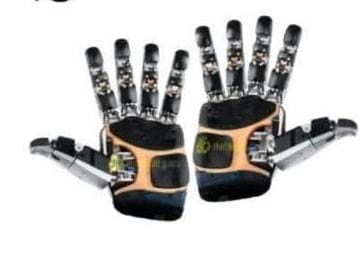
Phoenix uses its own patented hydraulic power transmission system to drive 20–21 degrees of freedom (DoF), rather than mounting heavy electromechanical motors at each joint. The system uses miniature hydraulic valves to control fluid flow, achieving an outstanding power-to-weight ratio and natural compliance — capable of lifting up to 25 kg while still handling fragile objects with delicate precision.
For tactile sensing, it uses a micro-barometer tactile array with 7 sensing points per fingertip, with sensitivity down to 5 mN, feeding real-time data to the Carbon AI intelligent control system for zero-shot in-hand object manipulation, with a joint response latency of only 0.5 ms.
High-frequency tendon system for reinforcement learning
Withstands many repeated test cycles without requiring fluid system maintenance
Shadow Robot — DEX-EE
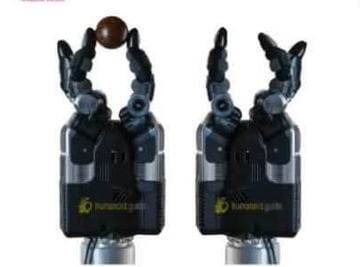
DEX-EE is a 3-finger hand about 50% larger than a human hand, prioritizing structural durability and modularity over mimicking human proportions. It is available in both symmetric and Chiral variants, the latter shifting the third finger downward and offset to the side, creating a thumb-like position to support teleoperation with motion capture gloves.
Driven by 15 Maxon DCX16 motors at the base of each finger, connected to 4 joints per finger via tendons in an N+1 structure that eliminates backlash. Sensor density reaches up to 155 channels per finger. The fingertips use a stereo camera pair to track the movement of 500–2,180 marker points on the silicone surface, at a resolution of 1280×480 @ 50 FPS, while the middle and base joints use 3-axis Hall effect sensors.
The low-level force control loop runs at 10 kHz within the motor unit, providing instantaneous active compliance, while host-level position control runs at 1 kHz over the EtherCAT bus, integrating stably with ROS architectures
Multi-joint electromechanical system — the standard research approach
Remains the core of research due to its precision and ease of deployment
Wonik Robotics — Allegro Hand V5 Sense
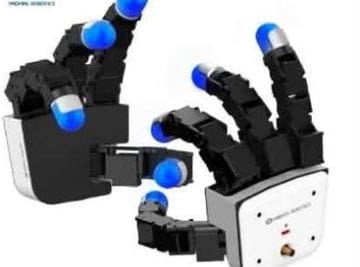
Drives 16 degrees of freedom using DC motors through high-ratio 288.35:1 and 576.7:1 gear reducers at each finger's secondary joints. Supports a payload of up to 15 kg while weighing only 1,240 grams. The 16-channel-per-fingertip tactile array uses capacitive pneumatic pressure sensing with temperature compensation, controlled via a CAN bus at up to 500 Hz.
Schunk — SVH
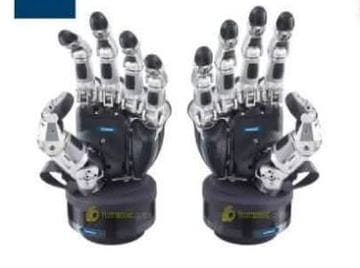
A 5-finger hand at 1:1 scale with a typical adult male hand, using 9 servo-electric linkages to control 20 connected joints. Its standout feature is integrating the control circuitry, voltage regulator, and power electronics entirely in the wrist, eliminating the external control box. Operates at 24V DC, with full ROS/ROS2 support
Decentralized-processing bionic hand
The convergence point between consumer-grade prosthetics and high-performance robotic end-effectors
Psyonic — Ability Hand
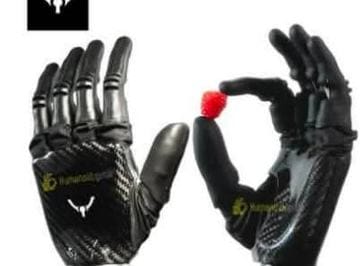
Weighs only ~490 grams, about 20% lighter than a typical adult hand. A carbon fiber frame with silicone rubber fingers that withstand impact without breaking, driven by 6 brushless DC motors controlling independent flexion-extension of all 5 fingers. Its main selling point is a finger-closing speed of under 200 ms
Senses touch via 30-point multi-touch pressure sensors across the fingertips, capable of triggering a "touch reflex" to instantly halt movement upon contact with fragile objects. Fully decentralized processing architecture with 12 Arm Cortex-M chips distributed throughout the hand, communicating via BLE, I2C, UART, and RS485
Self-adapting soft hand
Eliminate the active control loop entirely, letting mechanical compliance handle object conformity instead
qb Robotics — qb SoftHand Series
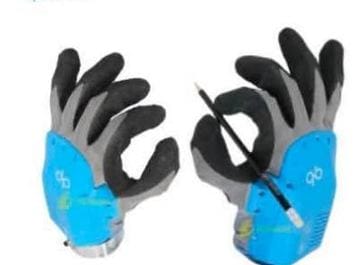
The qb SoftHand Research weighs 0.77 kg and supports a payload of 1.1 kg. It uses the RS485 protocol to command a single motor that pulls all 5 fingers together simultaneously. The qb SoftHand Industry adds IP65 water and dust resistance, weighs 0.99 kg, and supports a payload of up to 2 kg, communicating via EtherCAT or UDP — suitable for industrial environments with dust or hazards. Meanwhile, the qb SoftHand2 Research improves the soft joints to support a payload of 2 kg in pinch grip and 3 kg in power grip.
Comparison table: Physical Structure and Actuation
| Model | Fingers / DoF | Drive mechanism | Weight | Primary Material |
|---|---|---|---|---|
| Sanctuary Phoenix | 5 fingers / 20–21 | Miniature hydraulic valve | — (70 kg full-body weight) | High-Strength Polymer + Precision Metal |
| Shadow DEX-EE | 3 fingers / 12 | N+1 Tendon (15 Motors) | 4.1 kg | Aluminum/Brass, Polyurethane |
| Psyonic Ability Hand | 5 fingers / 6 | Direct electromechanical (BLDC ×6) | 0.490 kg | Carbon fiber + silicone |
| Allegro Hand V5 Sense | 4 fingers / 16 | Geared DC Motor | 1.24 kg | Metal Housing + Silicone Fingertips |
| Schunk SVH | 5 fingers / 9 drives (20 joints) | Servo-electric linkage | 1.3 kg | Aluminum + Stainless Steel |
| qb SoftHand Research | 5 fingers / 1 | Single-motor tendon pull | 0.77 kg | Flexible Polymer + Soft Silicone |
Comparison table: Sensors, Communication, and Control Frequency
| Model | Tactile Technology | Payload / Grip Force | Interface | Control frequency |
|---|---|---|---|---|
| Sanctuary Phoenix | Micro-barometer 7 cells/pad, 5 mN | 25 kg | Carbon AI (integrated) | 0.5 ms |
| Shadow DEX-EE | Stereo camera 1280×480@50FPS + Hall effect | ≥8 N at the fingertip | EtherCAT, USB 3.0 | 10 kHz / 1 kHz |
| Psyonic Ability Hand | Multi-touch 30 sensors | 66 N / 50 lbs | BLE, I2C, UART, RS485 | Finger closing <200 ms |
| Allegro Hand V5 Sense | Capacitive 16-pt, 0–400 kPa | 15 kg | CAN bus | 333 Hz |
| Schunk SVH | High-friction rubber surface (no array) | 4 kg / 20–140 N | CAN, USB, ROS1/2 | Integrated in the wrist |
| qb SoftHand Research | Single motor current sensing | 1.1 kg / 62 N | RS485, USB | 1.1 s |
Two Architectures of Latency Control
The difference between centralized and decentralized architectures lies at the heart of "response sensitivity" when an object is slipping from the hand.
Main processor (1 kHz) ──────▶ Communication bus ──────▶ Joint actuator
                         Latency: ~1–5 ms
Main processor (1 kHz) ──────▶ 12 decentralized microcontrollers (Arm Cortex-M)
                                       │
                                       ▼  Localized reflex loop: <1 ms
                              Joint actuators and tactile sensors
Alternative Market Landscape
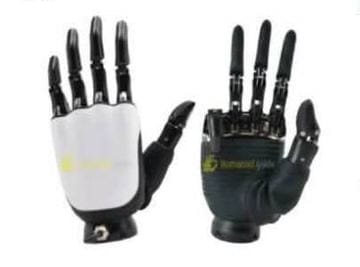
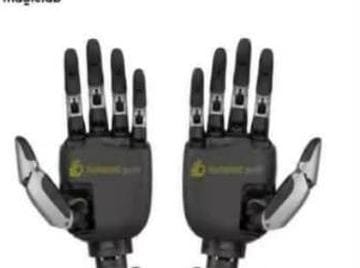
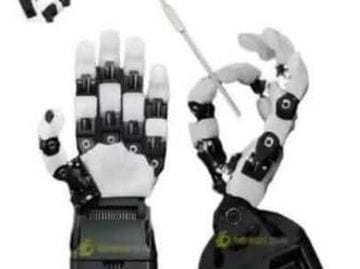
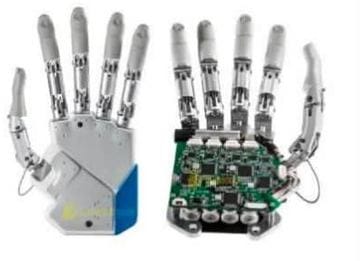
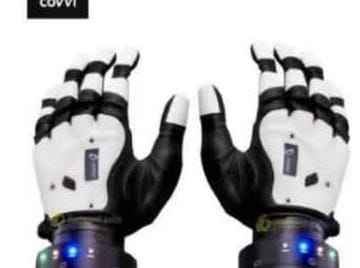
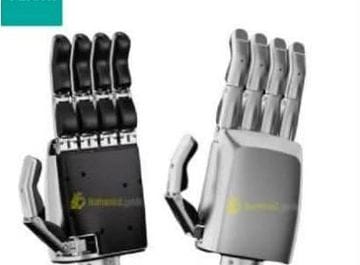
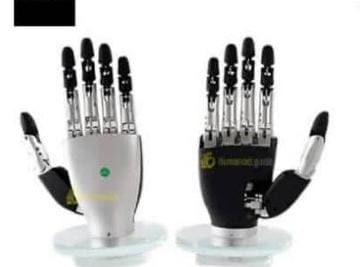
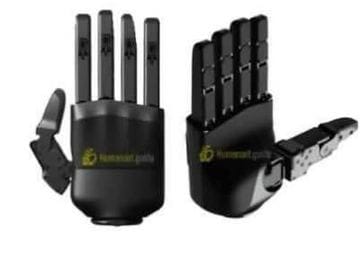
More affordable platforms are opening up broader access to grasping research
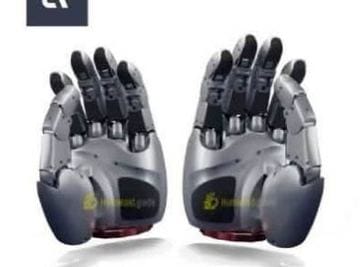
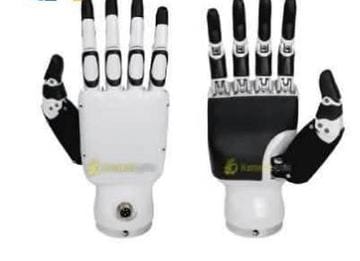
Full Catalog: Another 51 Models from the Same Database
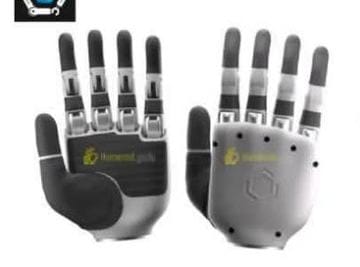
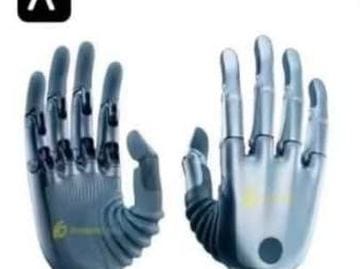
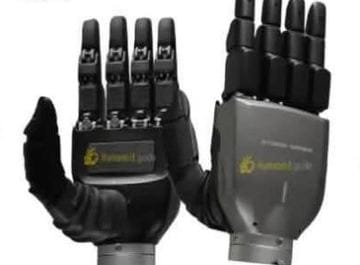
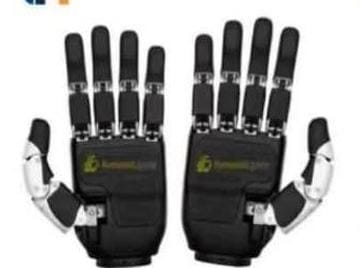
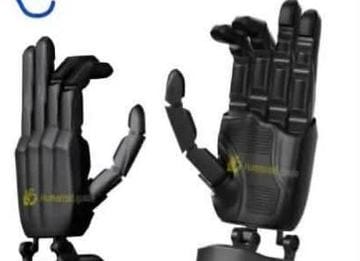
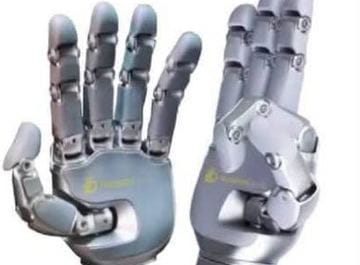
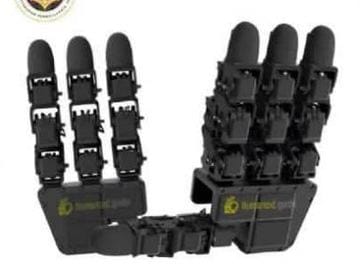
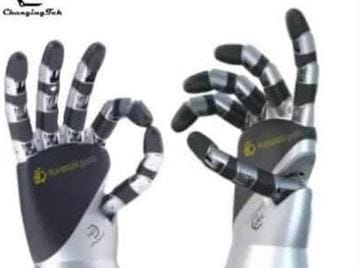
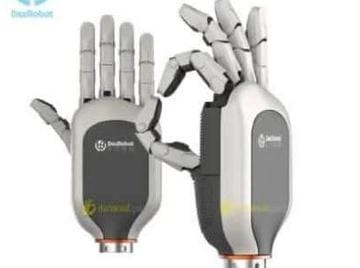
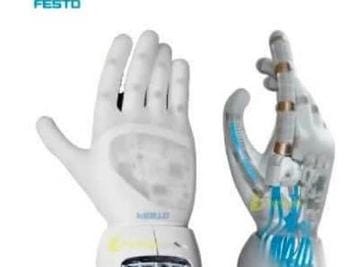
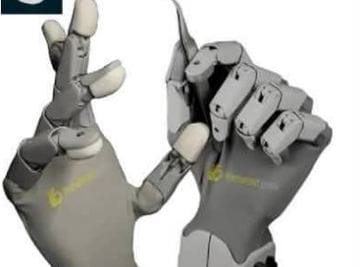
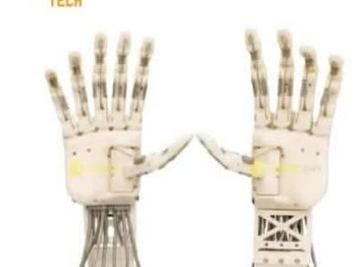
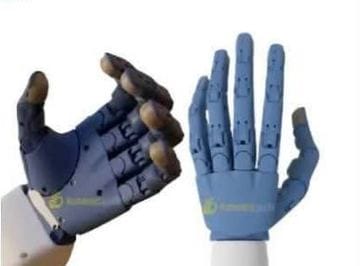
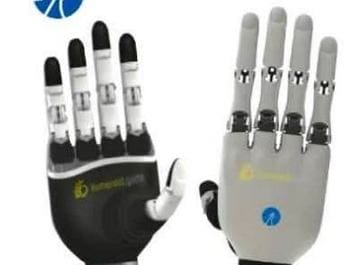
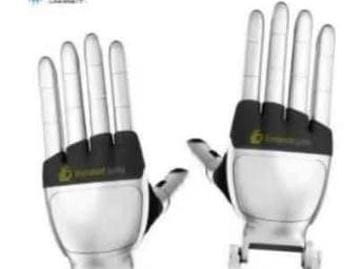
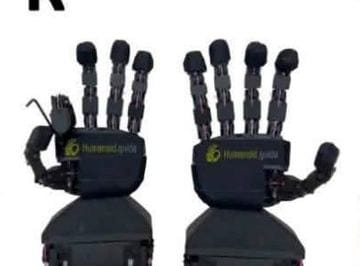
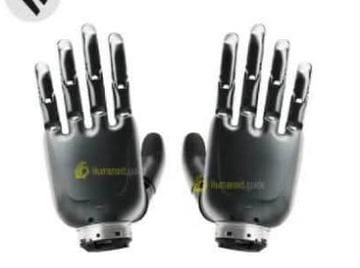
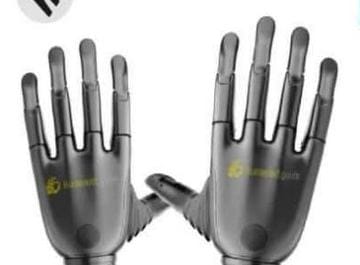
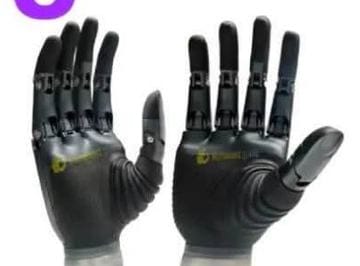
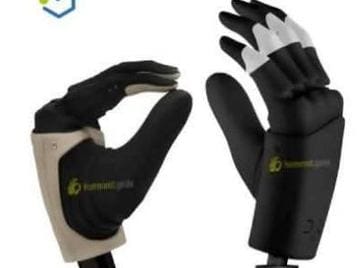
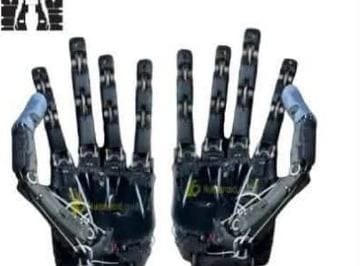
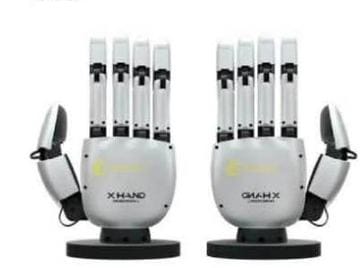
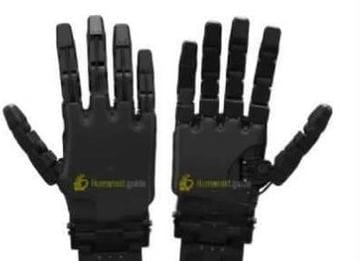
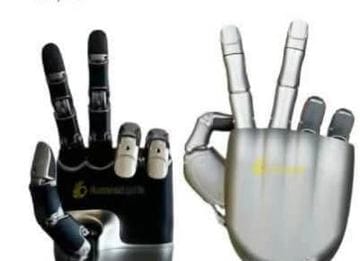
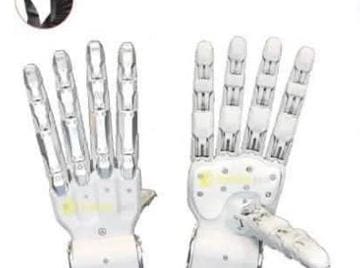
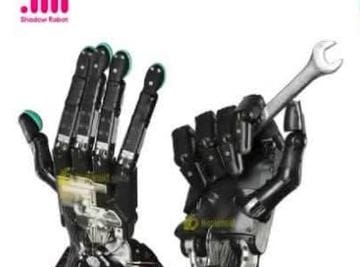
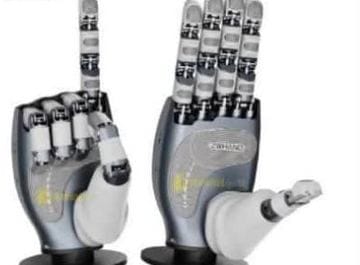
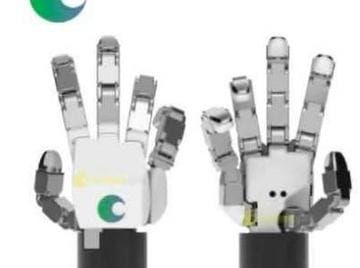
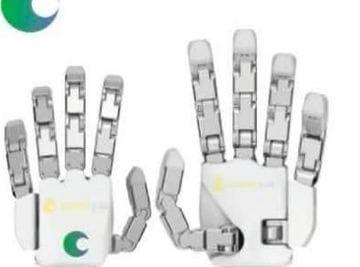
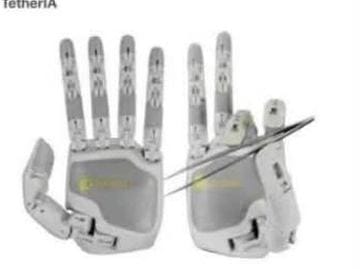
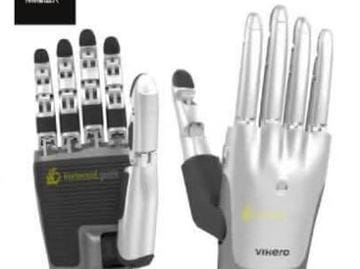
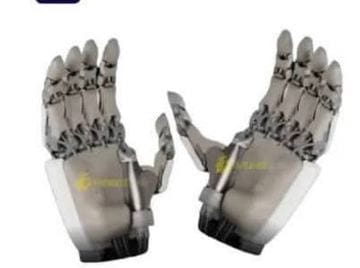
In addition to the 15 models covered in depth above, the humanoid.guide database includes 51 more models from manufacturers worldwide — sorted by manufacturer name; type to search and filter instantly.
Scorecard: Ranking 10 Robotic Hands Using Weighted Criteria
Completely revised based on the specialized mechatronic analysis report "Mechatronic Analysis and Quantitative Ranking of Dexterous Robotic End-Effectors" — the 1–5 point scoring criteria across 9 dimensions were locked in before the actual data was entered, then multiplied by defined weights (totaling 100%) to prevent bias from scoring after the fact. The sample set was changed from the main article to the 10 models this report scored completely across all 9 dimensions, which also includes humanoid robot hands such as Tesla Optimus and Unitree
| Dimension | Weight | Definition | Example from actual scores (5 highest ↔ 1 lowest) |
|---|---|---|---|
| DoF | 15% | Measures the number of active mechanical degrees of freedom (active DoF) that actually move | 5 = Tesla Optimus (22), Phoenix (21), Clone Hand (24–27) · 2 = Ability Hand, Inspire RH56E2 (6) |
| Grip Force / Payload | 15% | Grip force and payload relative to the hand's own weight | 5 = Phoenix (payload 25 kg) · 2 = Shadow DEX-EE (fingertip force only 8–18 N) |
| Tactile Sensing / Force Feedback | 15% | Density, resolution, and tactile sensor integration | 5 = Phoenix, Shadow DEX-EE, Unitree Dex5-1P (dense array/camera) · 1 = Schunk SVH (no array) |
| Accuracy/repeatability | 10% | Joint angular resolution and position repeatability | 5 = Shadow DEX-EE · 1 = Clone Hand (McKibben muscles have high hysteresis, making precise joint-angle control difficult) |
| Materials/Build Quality | 10% | Structural strength and advanced composite materials | 5 = Tesla Optimus, Phoenix, Shadow DEX-EE, Ability Hand · 2 = Clone Hand (early-stage prototype) |
| Durability/duty cycle | 10% | Resistance to repeated impacts and service life | 5 = Tesla Optimus, Shadow DEX-EE (withstands hammer strikes), Ability Hand (survives a 30-foot drop without damage) · 2 = Clone Hand (at risk of fluid leakage) |
| Control/SDK/ROS | 10% | Communication protocol, control loop frequency, and software support | 5 = Tesla Optimus (AI5 chip), Shadow DEX-EE (EtherCAT 10 kHz), Schunk SVH (full ROS1/2 support) · 2 = Clone Hand (Raspberry Pi 4B + proprietary software) |
| Price/Value | 10% | Actual selling price or material cost relative to the capability delivered | 5 = Clone Hand (material cost ~฿95,000) · 1 = Shadow DEX-EE (approximately ฿4,056,000) |
| Maintenance/Spare Parts | 5% | Ease of self part replacement and maintenance | 5 = Shadow DEX-EE, Unitree Dex5-1P (fingers can be replaced with just a few screws) · 1 = Clone Hand (requires maintaining an external hydraulic reservoir and water valve) |
| # | Model | DoF (15%) | Grip Force (15%) | Tactile Sensing (15%) | Precision (10%) | Materials (10%) | Durability (10%) | Control (10%) | Price (10%) | Maintenance (5%) | Total score |
|---|---|---|---|---|---|---|---|---|---|---|---|
| 1 | Tesla Optimus Hand (Gen 3) | 5 | 4 | 4 | 4 | 5 | 5 | 5 | 4 | 4 | 4.45 |
| 2 | Sanctuary AI Phoenix | 5 | 5 | 5 | 4 | 5 | 4 | 4 | 2 | 2 | 4.25 |
| 3 | Wonik Allegro Hand V5 Sense | 4 | 4 | 4 | 4 | 4 | 3 | 4 | 4 | 4 | 3.90 |
| 4 | Shadow Robot DEX-EE | 3 | 2 | 5 | 5 | 5 | 5 | 5 | 1 | 5 | 3.85 |
| 5 | Unitree Dex5-1P | 4 | 3 | 5 | 4 | 3 | 3 | 5 | 3 | 5 | 3.85 |
| 6 | Psyonic Ability Hand | 2 | 4 | 4 | 3 | 5 | 5 | 4 | 4 | 5 | 3.85 |
| 7 | Beijing Inspire RH56E2 | 2 | 4 | 4 | 4 | 4 | 4 | 5 | 4 | 4 | 3.80 |
| 8 | qb SoftHand Research | 4 | 4 | 2 | 2 | 3 | 5 | 4 | 4 | 4 | 3.50 |
| 9 | Clone Robotics Clone Hand | 5 | 4 | 3 | 1 | 2 | 2 | 2 | 5 | 1 | 3.05 |
| 10 | Schunk SVH | 2 | 3 | 1 | 3 | 4 | 4 | 5 | 3 | 3 | 2.95 |
Tesla Optimus Hand (Gen 3) — 4.45 · Overall champion
It leads the score by moving all 25 motors to the forearm instead of embedding them in the fingers, reducing finger inertia and protecting the motors from impact. This increases DoF to 22 points per hand, with pressure sensors on every fingertip. It is powered by the Tesla AI5 processing chip, which runs neural networks about 5 times faster than the previous generation, and has already entered actual production at the Fremont factory. Its main weakness is that it remains tied to the entire Optimus robot and is not sold separately as an end-effector for other manufacturers' robotic arms.
Sanctuary AI Phoenix — 4.25 · Hydraulics more durable than expected
Uses miniature hydraulic valves to drive 21 degrees of freedom, lifting up to 25 kg with enough delicacy to grasp fragile objects. A 7-point micro-barometer tactile array per fingertip, sensitive to 0.5 mN, feeds data to the Carbon AI control system, which responds in just 0.5 milliseconds, and the hydraulic valves have been tested to withstand over 2 billion cycles without leaking. The weakness is that Sanctuary AI has shifted its business model to selling software and hand technology rather than complete hardware units, so it is not sold as a standalone product — availability is limited to enterprise partners and research centers.
Wonik Allegro Hand V5 Sense — 3.90 · The most cost-effective research standard
Drives 16 degrees of freedom using coreless DC motors through high-ratio 288.35:1 and 576.7:1 gear reducers. Supports a payload of 15 kg while weighing only 1.24 kg. The 16-channel-per-fingertip capacitive tactile array offers temperature compensation accurate to 0.1 kPa, controlled via a CAN bus at up to 333 Hz. Priced at ฿372,000–฿1,183,000, it offers good value and has a long-established ROS/CAN user base. Its weakness is a rigid gear structure that is fragile against impacts in reinforcement learning tasks where the control policy is not yet stable; it may require setting collision limits in software or replacing gear teeth after severe impacts.
Shadow Robot DEX-EE — 3.85 · Most precise and durable, but most expensive
Co-developed with Google DeepMind, driven by 15 Maxon DCX16 motors in an N+1 tendon structure controlling 12 degrees of freedom across 3 fingers. Sensor density reaches 155 channels/finger, combined with a stereo camera tracking marker points on the silicone skin. The force control loop runs at 10 kHz and the position loop at 1 kHz over EtherCAT. It withstands actual hammer blows and fingertip covers can be replaced with just 6 screws. The weakness is a price of approximately ฿4,056,000, which limits it to well-funded labs, and a fingertip force of only 8–18 N, unsuitable for typical human-scale assembly work
Unitree Dex5-1P — 3.85 · Balance of speed and resolution
Designed for the Unitree H1/H1-2 humanoid robot, with 20 degrees of freedom (16 active + 4 passive), driven by coreless hollow-cup motors and in-house-developed force-controlled composite joints. Fingers can abduct laterally by ±22 degrees. 94 pressure sensors are distributed across 12 modules throughout the palm and fingertips, communicating via USB 2.0 at 1,000 Hz, giving fingertip precision of ±1 mm. Weakness is being relatively large and heavy compared to a human hand. The standalone price (not bundled with the robot) is ฿845,000–฿980,000, which is high for labs not already using the Unitree platform
Psyonic Ability Hand — 3.85 · Most impact-resistant at an affordable price
Weighs only 490 grams, uses 6 brushless DC motors to control all 5 fingers independently, closing fingers very quickly. Carbon fiber frame and silicone fingers withstand impact, surviving a 30-foot drop or a hammer strike. 30-point tactile sensors distributed across the fingertips connect to decentralized Arm Cortex-M chips, triggering a "touch reflex" that halts movement in under 1 millisecond. Grip force 66 N, recommended lift capacity up to 22.7 kg. Retail price ฿524,000, the cheapest in the top tier of the table. Weakness is having only 6 degrees of freedom, limiting in-hand manipulation tasks that require coordinating multiple independent joints simultaneously
Beijing Inspire RH56E2 — 3.80 · Low cost, high payload
Has 6 degrees of freedom across 12 joints, driven by linear actuators in a 790-gram heavy-metal frame. Thumb force is 30 N, other finger force 28 N, static payload up to 30 kg. Tactile sensors 5–17 points/fingertip, accuracy 5%, communicates via CAN/RS485/ModbusTCP at 1 kHz, position repeatability down to ±0.20 mm. Priced at only ฿335,000. Strengths are low cost and high payload, suited for two-handed assembly. Weakness is low DoF and a rigid joint frame, fragile against unstructured collisions unless a compliance control loop is set up beforehand
qb SoftHand Research — 3.50 · Single motor, most impact-resistant
Has up to 19 compliant joints, but is driven by a single motor pulling tendons to curl all 5 fingers inward simultaneously, automatically adapting its shape to objects without needing complex control algorithms. Weighs 0.77 kg, payload 1.1 kg, maximum grip force 62 N. Uses current sensing instead of a complex tactile array. Supports ROS, MATLAB, and C++. Strength is mechanical durability — the compliant joints absorb impacts and are nearly unbreakable. Weakness is the inability to move fingers independently, making it better suited to simple grasping than pick-and-place tasks that require separate finger control
Clone Robotics Clone Hand — 3.05 · Highest DoF but hardest to maintain
Mimics the human hand with carbon fiber bones, artificial tendons, and synthetic tissue, driven by 36–37 McKibben hydraulic artificial muscles (HAM) using water as the actuating medium, providing 24–27 degrees of freedom. An external hydraulic pack houses a 500-watt motor and water pump, delivering 400 liters/hour of fluid at 10 bar. The muscles contract as fast as 15 milliseconds and last over 650,000 cycles because water itself helps dissipate heat. Material cost is low, at only about ฿95,000. The weakness is that McKibben muscles have very high hysteresis, making precise joint angle control difficult, and the external hydraulic pack requires maintaining water valves, risking leaks and requiring specialized control software, making it the highest-maintenance option in the table
Schunk SVH — 2.95 · Controls smoothly but lacks tactile sensing
A 5-finger hand at 1:1 scale with a typical adult male hand, using 9 servo-electric linkages to control 20 connected joints. The control circuitry and power electronics are all integrated in the wrist. Operates at 24V DC, grip force 20–140 N, payload up to 4 kg. Supports CAN, RS485, USB, and has full ROS1/ROS2 drivers. Strength is the compact wrist electronics, proven reliable in collaborative robot (cobot) work. Weakness is having only 9 drive axes, no support for lateral finger abduction or fine in-hand manipulation, no tactile array at all, and a price of ฿1,014,000–฿1,690,000 that is relatively high for the level of dexterity delivered
Synthesis: Reading the Trends from the Numbers
Mechanical compliance is the answer to repeated collisions in RL
Reinforcement learning training requires thousands of hours of unstructured exploration, during which an as-yet-unstable control policy causes frequent hard collisions. Rigid electromechanical hands transmit impact forces directly into their gears, wearing them out quickly. There are two solutions: a high-frequency active compliance control loop such as the 10 kHz loop in DEX-EE, or a hydraulic system such as Phoenix, where compressible fluid absorbs impact energy on its own.
Hydraulics trade energy density for maintenance burden
Hydraulic systems like Sanctuary AI offer excellent power density and shock absorption, but require continuous maintenance of seals, pumps, and valves, while electromechanical/tendon-driven hands are easier to maintain but require complex joint control algorithms to emulate zero joint torque and protect the hardware from damage
Decentralized processing eliminates the communication bus bottleneck
A centralized CAN/EtherCAT architecture must send data to a central host for computation before returning commands, creating latency that limits response to sudden events, such as an object slipping from the hand. Ability Hand solves this problem with 12 Arm Cortex-M microprocessors distributed throughout the hand, processing finger-level tactile data locally, enabling a "touch reflex" in under 1 millisecond — faster than the central host would even register the contact
Tactile sensing is shifting from numeric data to imaging
Point-based pressure sensors give a straightforward force vector but are fragile and involve complex wiring. Camera-based tactile sensors, such as those in the DEX-EE, convert touch into video data by tracking the deformation of a patterned silicone skin, allowing visual AI models to process touch as a deformation field, which makes sim-to-real policy transfer easier
Strategic Summary and Next Directions
The fields of human prosthetics and industrial robotics once developed on separate paths — prosthetics emphasized light weight, aesthetics, and durability, while industrial robotics emphasized payload, precision, and control bandwidth. The arrival of general-purpose humanoid robots has forced these two approaches to merge. The hand must be light enough not to burden the arm, strong enough for sustained work in human environments, and responsive enough for complex real-time tasks
The Ability Hand, used both by real amputees and by more than 90 robotics research organizations, is an example of a valuable data loop — teleoperation data and real-world prosthetic-use data are fed back into simulated environments to train machine learning policies, which are then deployed on autonomous humanoid robots, accelerating their ability to operate in unstructured environments.
China's rapidly growing manufacturing base is driving prices down. Where research-grade robotic hands once cost ฿1,014,000–฿2,028,000, limiting research to a handful of leading labs, the arrival of options priced at ฿71,000–฿355,000 is making them far more accessible. As high-DoF, flexible, densely-sensored end-effectors become commodity items, the bottleneck in robotic grasping will shift from a hardware constraint to the intelligent control software needed to coordinate these complex systems in the real world.
References
Selected exclusively from the most official and widely recognized sources (direct manufacturer websites, leading robotics engineering media, and research databases) from among the news sources, manufacturer websites, and specification documents used to compile this article (Sections 00–13), arranged as a unique academic-style reference list — links are shown as plain text, not clickable links.
Related Articles


Interested in learning more
 Add friend via LINE, click here